A MCP server for deep research and report generation
Wellknown found it in public sources; nobody has proven control of it yet. Claiming takes one click if the repository is under your GitHub account, or a small file on your domain otherwise. Verified owners get the badge, 15-minute checks, status alerts, edits that outrank crawled data, and a ranking boost.
Agents can do it too: POST https://wellknown.network/api/v1/claims with {"agent":"iflow-mcp-mcp-server-deep-research","method":"well_known_file"} — machine-readable steps at claim.json, guide at /docs/claim.
Everything here was measured by our prober or read from a registry. Nothing is self-reported.
Attributed to the source that supplied each field. Treated as claims, not facts.
# MCP Server for Deep Research MCP Server for Deep Research is a tool designed for conducting comprehensive research on complex topics. It helps you explore questions in depth, find relevant sources, and generate structured research reports. Your personal Research Assistant, turning research questions into comprehensive, well-cited reports. ## 🚀 Try it Out [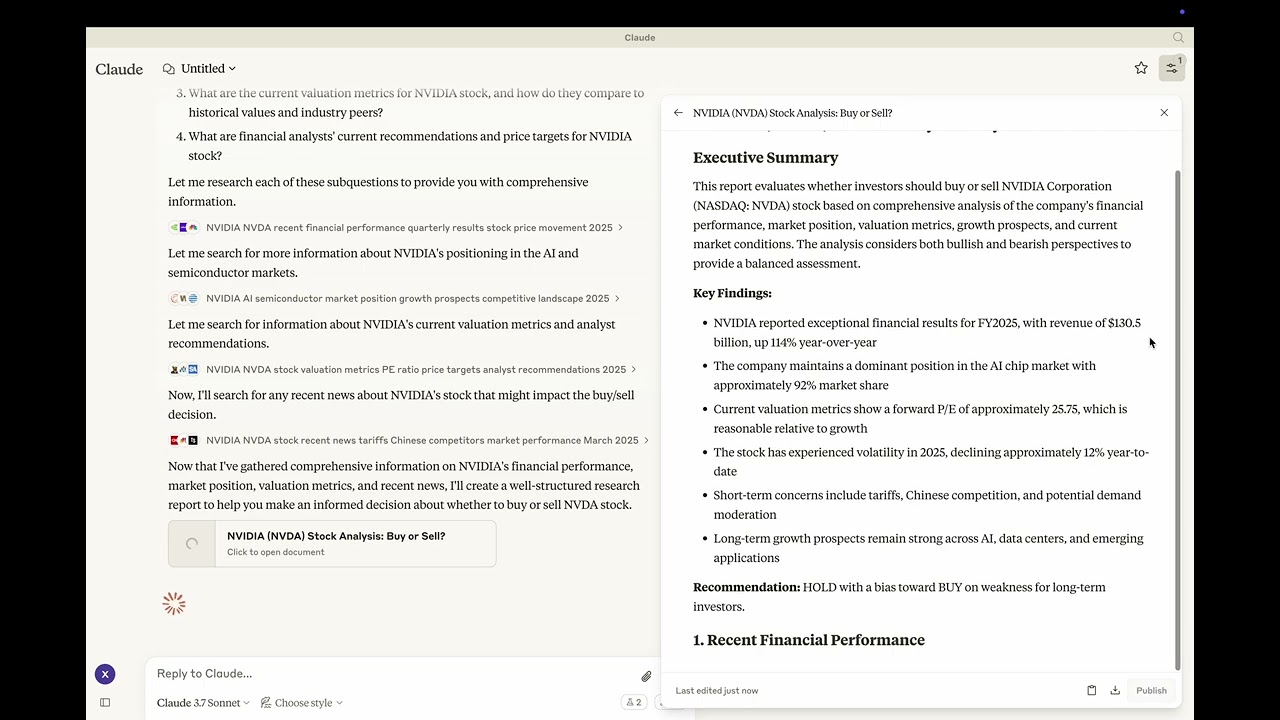]([VIDEO_URL](https://youtu.be/_a7sfo5yxoI)) Youtube: https://youtu.be/_a7sfo5yxoI 1. **Download Claude Desktop** - Get it [here](https://claude.ai/download) 2. **Install and Set Up** - On macOS, run the following command in your terminal: ```bash python setup.py ``` 3. **Start Researching** - Select the deep-research prompt template from MCP - Begin your research by providing a research question ## Features The Deep Research MCP Server offers a complete research workflow: 1. **Question Elaboration** - Expands and clarifies your research question - Identifies key terms and concepts - Defines scope and parameters 2. **Subquestion Generation** - Creates focused subquestions that address different aspects - Ensures comprehensive coverage of the main topic - Provides structure for systematic research 3. **Web Search Integration** - Uses Claude's built-in web search capabilities - Performs targeted searches for each subquestion - Identifies relevant and authoritative sources - Collects diverse perspectives on the topic 4. **Content Analysis** - Evaluates information quality and relevance - Synthesizes findings from multiple sources - Provides proper citations for all sources 5. **Report Generation** - Creates well-structured, comprehensive reports as artifacts - Properly cites all sources used - Presents a balanced view with evidence-based conclusions - Uses appropriate formatting for clarity and readability ## 📦 Components ### Prompts - **deep-research**…
Mapped onto the structured taxonomy from declared text and observed tool names. Confidence shown for derived entries.
Every source is kept verbatim. Field changes are logged as events.